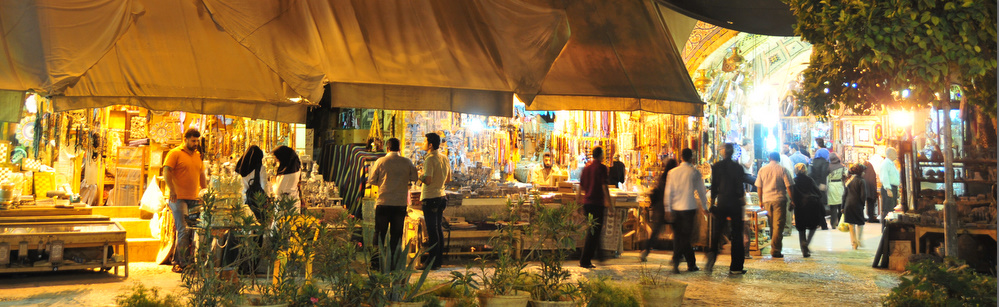
I’m so happy you visit my country. What do you think of Iran? We love it here. It’s such a beautiful country and everyone is so friendly. Before, did you think it’s dangerous here? No, not really that’s all just politics and the media. What do you think now? We feel very welcome. It’s not dangerous here at all. The most dangerous thing about Iran is the traffic. (Honestly it’s quite an adventure trying to cross a street and not getting run over by cars and motorbikes ignoring red lights and traffic wardens.) Do other people back in your country think it’s dangerous here? Yes, some but not everyone. We’ll tell them what a beautiful country Iran is when we’re back home.
We don’t know how many times we’ve had these type of conversations during the last two weeks. It’s almost heartbreaking that we have to reassure people that we’re having a great time and that everyone is treating us with incredible hospitality. We do get a lot of curious stares but not more than in other countries we’ve visited. Especially older women are very curious and nod their heads and smile at me. Sometimes if there is a young woman around who speaks some English they get her to translate. Then I’ve to answer questions like if we’re married, if we have children. Younger ones sometimes want to know if I’ve problems with the hijab (the Islamic dress code) and especially with wearing a head scarf. In fact it’s often difficult to get from A to B because people are stopping us all the time to say hello, to find out where we’re from and if we’re having a good time. This can be anywhere in the streets, in a shop, in public toilets, busses etc. We’ve had countless of offers to have tea and also a few times to eat. People want to swap mobile phone numbers in case we need help during our trip in Iran. Some have given us little presents like postcards. I had a woman coming up to me, for example, smiling, handing me a poem at the tomb of Hafez (a famous Iranian poet) and then just turning around and walking away without saying a word. One couple gave us a signed postcards and asked us to take a picture with them. It’s kind of funny to think how many pictures of us with people of different countries must be around now.
The first day or two we did feel a bit cautious not to break any islamic customs and to offend anyone. But things are so much more easy-going than we expected and we can’t stress enough how welcome we feel everywhere we go. There are certain customs that you should keep in mind, especially when talking to older people or people who are dressed more conservatively. So James generally addresses men and I wait if I get included in the conversation before saying a word and the other way around with women. Often after a few minutes things ease up a bit and there is none of that with younger people. We’re also surprised how liberal the dress sense can be among the younger crowd. It depends of course where you go. Tehran is very liberal and so are Esfahan and Shiraz. In Kashan (where we’re now) you certainly see more women wearing chadors (bit tent-like black cloak) than manteaus (coats, a bit like trench coats) or tunics. That doesn’t mean you shouldn’t respect the hijab but there is no need to be overly conservative and wear a chador which is actually quite tricky when you’re not used to it anyway. At some rare sights you may be required to wear a chador but then you usually get one handed at the ticket counter. In Esfahan at the Imam Mosque I got quite entangled in my Chador when trying to take off my shoes much to the laughter of some women watching the scene. Next thing one is running up to me, talking wildly in a mix of English and Farsi, adjusting my head scarf and wrapping the cloth around me like a parent would do with a four year old while her friends captured the scene on video camera. Well, I guess their families will have a good laugh watching the clip 🙂
We already felt that the friendless of the Iranian people on our flight from Tashkent to Tehran. Our flight was delayed for several hours and the Iranian crew was a bit unsure if we would take off at all. While waiting the crew checked up on us all the time, we were treated to tea, biscuits and then lunch until we were told “Congratulations. You’re flying today.” So we boarded the plane and waved “good bye” to the stan-countries and endless custom and passport checks. Driving with a cab into Tehran felt a bit like flying as well whenever we actually managed to move. Tehran is really one big traffic jam which means traffic rules only exist on paper. Wherever there is space, whether it’s on the road or on the pavement, people just go for it. With 15 million people and who knows how many cars, it’s a hectic and noisy and also a seriously polluted city. But there is something about this city and we enjoyed spending a couple of days there checking out a few sights like the massive bazar or the Golestan Palace of the Qajar rulers which is so full of bling that Versailles and Schoenbrunn are nothing in comparison. Speaking of bling, one of Tehran’s main tourist attractions is the National Jewel Museum which houses jewelry that will seriously blind you. We weren’t too psyched up going there but we must admit that it was definitely an experience. A surreal one to say the least when you see all this wealth and then you go out onto the streets and everyone around you is covered up. Unfortunately photography is not allowed but just google the museum and in particular search for the Darya-ye-Nur (Sea of Light), the largest uncut diamond in the world, the Peacock throne (the name speaks for itself) and the Globe of Jewels.
From Tehran we headed to Esfahan which is said to be one of the most beautiful cities in the Islamic world. Such descriptions obviously set expectations very high but we weren’t disappointed. Esfahan was definitely a highlight and should be on everyone’s list who wants to visit Iran. Especially the buildings around the Imam square (the Imam Mosque, the Sheikh Lotfollah Mosque and the Ali Qapu Palace) are stunning. It’s hard to describe the beauty of them but the pictures James took try to do them justice. The Si-o-Seh Bridge and the Khaju Bridge, down at the Zayandeh River are also worth checking out and the Armenian quarter “Jolfa” which feels like a different world entirely with its Christian community and 13 odd churches.
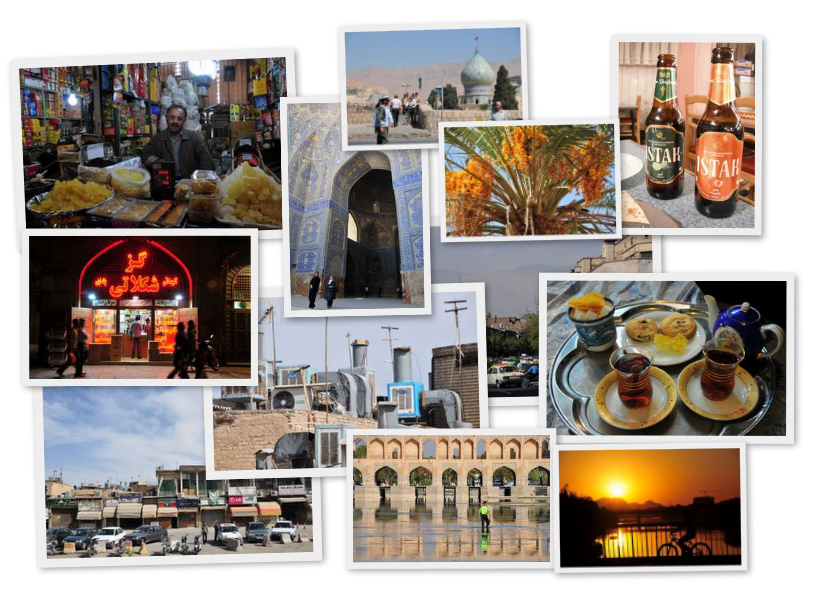
Our next stop was Shiraz known as the city of poetry, gardens and wine. We would have killed for a bottle of red wine but had to stick once more to Iranian beer, a non-alcoholic malt drink that you can also get with various fruit flavours like lemon, pomegranate, peach etc. Not bad actually. Compared to Esfahan or any other Iranian cites we visited, Shiraz won’t win the first price. There are some nice sights like the tomb of Hafez and nice gardens. But for us it was mainly a good base to visit the ancient town Persepolis and Naqsh-E Rostam and Naqsh-E Rajab, more than 2000 year old rock tombs with fantastic reliefs. Persepolis didn’t disappoint but we both almost liked the Naqsh-E Rostam and Rajab more. Maybe because we hadn’t even heard about them before and were surprised by their beauty. We highly recommend stopping there on the way to Persepolis.
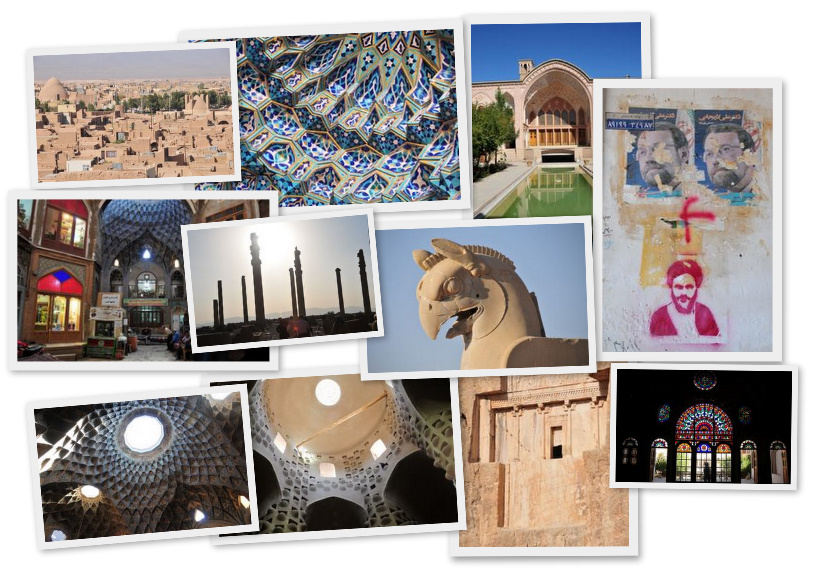
From Shiraz we took another bus ride to the desert city Yazd which has a really nice old town mainly built from old mud-brick buildings.On the roofs you can see badgirs, ancient wind towers or wind catchers. Sort of natural air conditioning which is much appreciated even in October when the temperatures are still in the low 30s. It’s quite fascinating to see how they work, check out this link if you like http://en.wikipedia.org/wiki/Badgir. We also visited some interesting sights in the vicinity like the ancient Narein castle in Meybod, Chak-Chak, Iran’s most important Zoroastrian pilgrimage site (a pre-islamic religion, still big in India, Freddy Mercury’s family are Zoroastrian) and the abandoned mud-brick village Kharanaq which is believed to be more than 1000 years old but now is only inhabited by one old lady. The rest of the villagers moved to modern houses that the government provided them with about 30 years ago.
Now we’re in Kashan where we’re staying in a nice historical house and are taking it easy after quite a full on program during the last two weeks in Iran. There is so much to see here. Everywhere you go you really feel that this is where civilization has started, where so much of our early inventions and knowledge have originated from. It’s hard to take it all in at times and we feel that we ready for a change from cities and deserts and can’t wait to experience some nature again and get off the beaten path. This afternoon we’ll check out one more ancient village, Abyaneh, some 80kms outside Kashan. Then tomorrow we’ll head to the North-West to the Caspian sea and later explore the mountains and valleys in this area or whatever else takes our fancy.
cool. thanks for sharing. just curious, why was the abandoned village abandoned?
It’s an earthquake prone area (like a lot of areas in Iran) and the mud brick buildings aren’t that stable. There was also no running water or electricity in the village and it couldn’t be brought to modern standard. So the government built modern houses for the villagers but they weren’t forced to leave. Only the one, now old, lady didn’t want to move and decided to stay.