In Iran James was “Miiisster James”, I was sometimes “Miisiis” but mostly not addressed by my first name. In East Turkey all foreigners seem to be simply “tourist”. As there aren’t many around we stick out. Wherever we go, we hear blablaba tourist, blabla tourist and wish we could understand some Turkish or rather Kurdish since East Anatolia is predominantly Kurdish. Most people are friendly and helpful but we felt not as open as what we’ve experienced just across the border in Iran. Maybe that’s because of their somewhat difficult standing in this country or maybe because it’s one of the more conservative areas in Turkey. Trying to say a few words in Kurdish rather than Turkish to acknowledge the locals’ ethnic background definitely opens a few doors. Nevertheless we feel welcome and it’s absolutely safe to travel around since the truce between the PKK and the Turkish army. In fact if it weren’t for the army presence everywhere and passport checks on public transport, we maybe wouldn’t have even thought of the violent conflict that used to be in this part of Turkey.
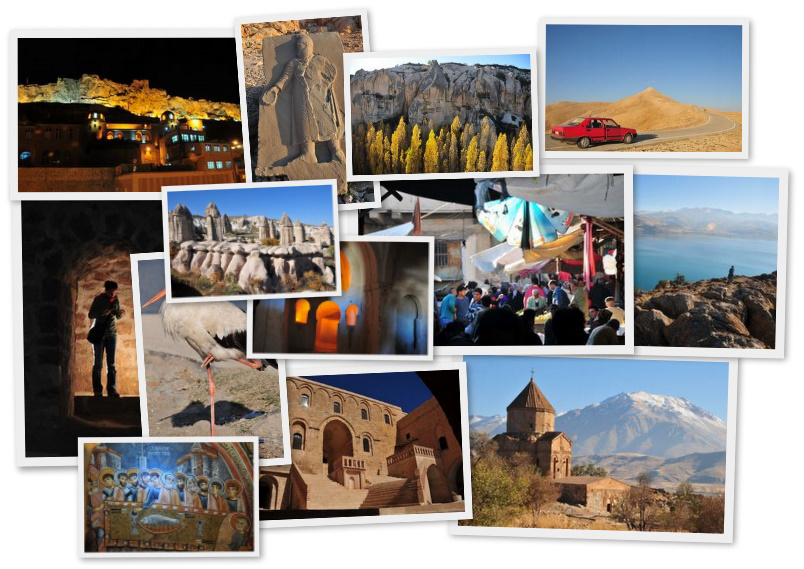
Our first stop in East Anatalia was the little town Dogubayazit about 40km from the Iranian border. The town itself isn’t anything special but the surrounding mountain scenery is stunning, especially Mount Ararat, Turkey’s highest mountain. It also has one of the biggest army compound and training court we’ve ever seen in the barely-outskirts of the town. There are no walls, just some barbed wire around the area where you can see massive tanks (or try to get out of their way when you meet them in the streets) and all sorts of military equipment and watch regular soldiers’ drills. Sometimes you can even hear training shots at night. We definitely felt very safe… But the highlight for many visitors is of course not the tanks but the ascent of Mount Ararat. Unfortunately at his time of the year the peak is already covered in snow and the climbing season is already over. So we had to make do with looking at it from a distance and opted to explore the nearby 17th century Ishak-Pasa Palace instead. We must admit we had never heard of it and we were both taken by total surprise by its beauty. The mix of Selcuk, Armenian, Gregorian, Persian and Osman elements give it a bit of “1001 Arabian Nights” feel and the phenomenal view of the surrounding snow capped mountain was almost cheesy. Since it’s low season now we had the place to ourselves which made our visit even more special. Getting up there took a lot of patience though. We had to wait for a good 1 1/2 hour until the minibus heading in the direction of the palace was deemed full enough to leave. In fairness we were offered tea while waiting to warm up so waiting wasn’t really a chore. But we realised that we had to believe the stories we read and heard that travelling during low season may be more difficult in some areas, especially the less touristy ones.
From Dogubayazit we headed to close by Van to check out Van Lake and the Akdamar Kilisesi. You may have heard about this Armenian church on Akdamar island on the news lately when reports were showing a special ceremony was held there as sign that Turkish Armenian relations are improving. We weren’t sure if we would manage to get on the island as the boat only leaves when there is a minimum of 15 passengers and, well it’s low season now. But after having waited a couple of hours and sunbathing on the jetty, two more tourists showed up and then some very determined Turkish ladies who haggled hard with the boatmen and convinced them to head off with us six for a very reasonable price. The trip to Akdamar is definitely worth it for the scenery and the church is interesting too. The clear blue water of the lake and the rocky hills reminded us a bit of New Zealand. However, Van itself didn’t really do it for us. Maybe we just didn’t see the right corners but to us it was a modern characterless city with not a lot to see. So we were pretty keen to move further east to our next stop the town Diyarbakir which used to be the centre of the Kurdish resistance in the 1980s. Diyarbakir was more a transport hub for us on our way to and back from Mardin, an antique town in South East Anatolia. But we did go for a wander through Diyarbakir’s old town to get a bit of a feel of the place. It was interesting to see but it did feel like a pretty tough place, quite closed and sadly a lot poorer than other areas we had seen in East Anatolia. After a couple of hours walking around we were ready to move on to Mardin.
Even though Mardin is only a 1 1/2 hour bus ride from Diyarbakir it’s a totally different world. It has more of an Arab feel to it since it’s so close to the Syrian border and the people are a mix of Turkish, Syrian and Christian. Also the scenery is very different to the rest of East Anatolia which has high mountains or green hills and quite a few lakes and rivers. In contrast Mardin is set high on a rocky plateau and overlooks the dry Mesopotamian plain that reaches all the way to the Syrian border and further. After a couple of hours wandering through the dusty streets and trying not to get run over by some donkey, you definitely feel like you’re not in Turkey any more. It’s a very pretty town and it has started to become a very popular place among Turkish tourists but it still has managed to keep an old world charm. Sitting out on a roof terrace, looking over the Mesopotamian plain and drinking a cup of tea is simply magic. The next morning we decided to save some lira and walk 6km to the nearby Deyrulzafaran Monastery despite the heat. The locals thought we were a bit mad because Turkish tourists would surely rent a car. But hey, we’re backpackers and a little exercise never harms. On the way back a group of young Turkish gave us a lift back to Mardin in their minivan and treated us to some Turkish music and dancing (well as much as you can move in a small van). The monastery itself we didn’t find overly impressive but we got chatting to some Assyrian people and learnt more about their difficulties which made the visit a lot more interesting. Wherever you go in this part of the country you will come across conflicts between minorities and the government. But everyone emphasizes that things are a lot better now and let’s hope it will stay this way or get even better.
Our next destination was Nemrut Dagi known for the very curious stone statues on the peak of Mount Nemrut, particular nice at dawn or dusk. The trip to Nemrut took the whole day with several minibus changes and a ferry ride but we went through some interesting Kurdish parts. Especially our two hour wait in the little town Siverek was an experience. We passed the time walking up and down the main road which was packed with older Kurdish men wearing traditional clothes and white or purple head scarf and also had some tea in a tea house full of only elderly men. I guess if we hadn’t been with this super nice guy Fesih we had met on the bus we wouldn’t have thought of entering the place, thinking it would be inappropriate for a woman. We weren’t necessarily welcomed with open arms like in Iran but we didn’t feel unwelcome. There are obviously different rules for tourists and locals. We would have loved to take pics in the streets or in the teahouse but it was just too awkward. We spent the entire day with Fesih although he didn’t speak a word of English and we of course neither Kurdish or Turkish. It’s always fascinating how you can communicate with people for hours without words. He is such a lovely man, wouldn’t let us pay for our bus fare or tea. The hospitality we’ve experienced in Muslim countries is very humbling to say the least. Nemrut Dagi was great. How and why these statues have ended up on the peak of the mountain, no one really knows. They were only discovered in the late 19th century and archeologist have since been trying to learn more about their history. Definitely worth the long trip to the middle of nowhere though.
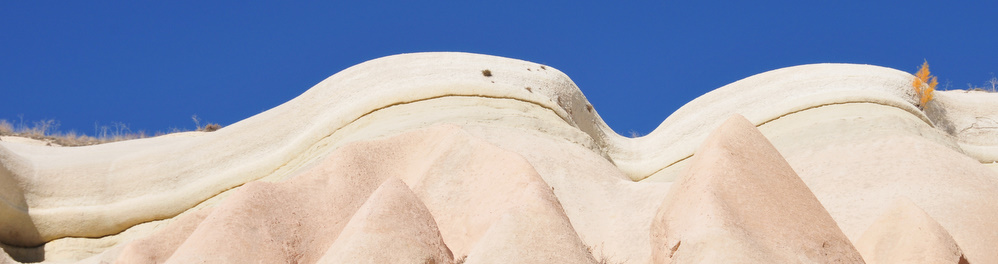
From Nemrut we headed to famous Cappadocia. We were looking forward to this particular area for quite some time and our stay totally lived up to our expectations, even exceeded them. Originally we only wanted to stay a couple of days and not just hang around the main, quite touristy town Goreme. In the end we ended up staying for four days in a beautiful little guesthouse high up on the hill away from all the hustle and bustle. Well actually there wasn’t any of that because it’s pretty dead at this time of the year. The best time to come really as it’s also not too hot. Although Goreme is mainly a collection of hotels and guesthouses, we must admit that we enjoyed all the luxuries you can get there. Most of our trip has gone through less “developed” places and we were craving for a decent cup of coffee (not instant!), a hot shower and a comfy bed with crisp bed sheets. This may sound funny to you but these are the three things we have started to miss after six months on the road. So we did catch up on sleep, had roasting hot showers and treated ourselves to the best coffee we’ve had since leaving Sydney. For those who know what coffee addicts we are will understand why this is just a big deal to us 🙂 But the highlight in Cappadocia is of course the peculiar “fairy chimney” landscape and there are some fabulous walks you can do. Especially the Rose Valley is a must see as well as the underground city Derinkuyu and the beautiful Selime monastry. Cappadocia is unlike anything we’ve seen before and it’s so curious to imagine that people actually lived in these rocks, built churches in them and dug massive underground cities with storage areas, kitchens, living rooms and proper air shafts to protect themselves against Arab invasion. It’s like a big historical playground and we can understand why it’s one of the most popular places in Turkey – a must see in Turkey that’s for sure.